
Sunday Best: The Untold Story of Ed Sullivan
When I was a girl, we didn’t have a TV in our household. Shocking, I know, but we were part of a forgotten demographic. When we finally did get a hand me down black and white console, Batman was on and in color, but I only imagined the color part. I watched that and Star Trek and Laugh In. My dad watched Ed Sullivan. Sometimes, we watched shows at other people’s houses, and that’s how I saw The Beatles in 1964, when I was too young to understand all the screaming. That, and I was a tiny queer girl who didn’t get it, but that’s a commentary for another day. My grandmother loved Ed Sullivan (and Lawrence Welk), so I liked him at the very least for that alone. Mimes, stupid puppets, incredible Asian gymnasts, spinning plates…those are the acts I remember seeing as a child. Watching this documentary made me realize something important.
Ed Sullivan is my hero.
This was not a safe time to be someone who was not racist. Someone who appreciated talent no matter the color of the artist’s skin. It was dangerous to be like that. It was bold and atypical. No matter how strongly I say these words, if you’re not old enough, you truly cannot understand it. I would say that’s okay, but we’re sliding back into those times and that makes me terribly sad. So sad that I cried seeing some of the imagery that passed me by back in the day because I didn’t realize the enormity of what I was watching.
Back then, seeing black people on television was super unusual. Sammy Davis Jr. played on The Rifleman a couple of times, there was a show about a black nurse named Julia, Uhura was a deep space telephone operator on Star Trek. But on Ed Sullivan you could see The Jackson Five, or Harry Bellafonte (which I didn’t realize was a REALLY BIG DEAL), or James Brown, or any number of black performers who reached the pinnacle of their career being on the Ed Sullivan Show. Being a child, I did not realize the enormity of what I was watching. I just wanted the spinning plates to come back. Sorry, I’ve always been shallow.
Ed Sullivan was the quintessential suited and genteel white gentleman, someone difficult to discount for the rabid racists who ruled the world then. His shoulders were broad, he spoke in an old fashioned accent (see the comment I made in the review of The Fantastic Four about mid-century Hollywood) – he was utterly, obviously, a white man. Top of the food chain.
This documentary is a little light on contemporary interviews with Mr. Sullivan, but the one opening the documentary brought me to tears because he described in only a few words, BACK THEN, the fraught times he lived in and how deeply he understood it. It was no mistake, no accident that he brought on black talent, even when they were considered political kryptonite.
I cried more than once watching this. If you’re younger than me you won’t fully understand. That’s okay because most people are younger than me, but I want you to get a hint at how massive his rebellion was, and see that he did it on purpose. It speaks to the current political climate because it’s a blueprint on how to say screw you to the racist haters with class and intelligence.
Something else this documentary made me realize was why TV is so very different from movies. Television grew up in an era of massive technical revolution. The technicians responsible for beaming shows into American households were…technicians. They weren’t artists but engineers. It’s cool to come to new understandings, even at my advanced age.
One of my questions was touched on but not deeply talked about. How many people were offended by the large – for its day – number of black performers on a gigantic TV show? (the numbers were astounding). Of course the stupendously racist south hated how many black people soiled their TV screen every Sunday, but I would have liked to have seen more of a breakdown of who, and how, the Ed Sullivan Show was received by an American audience. Of course the south hated it (though they watched anyway – some things never change), but how did other parts of the country really respond to it? I don’t remember any pushback from my family, but I was young and probably didn’t realize what was going on. Too mesmerized by the spinning plates and Chinese acrobats.
Is this a great documentary? Sure. I learned a lot, and it made me rethink a lot about my childhood. Young people today will get a tiny taste of what it was like back then, and maybe rue the resurgence of that kind of culture through a new lens. As an historian, I love it when people are given a chance to understand, even a little, how we got to where we are today and maybe how we can grapple our way out of repeating terrible history. SEE THIS DOCUMENTARY. If you’re young you won’t recognize a lot of the huge acts Ed Sullivan featured. See it anyway.
Triggers: bald faced verbal and physical racism
Available on: Netflix
LINKS:
- Sunday Best: The Untold Story of Ed Sullivan – On Ed Sullivan.com
- Sunday Best: The Untold Story of Ed Sullivan – Netflix Site
- Sunday Best: The Untold Story of Ed Sullivan – IMDB
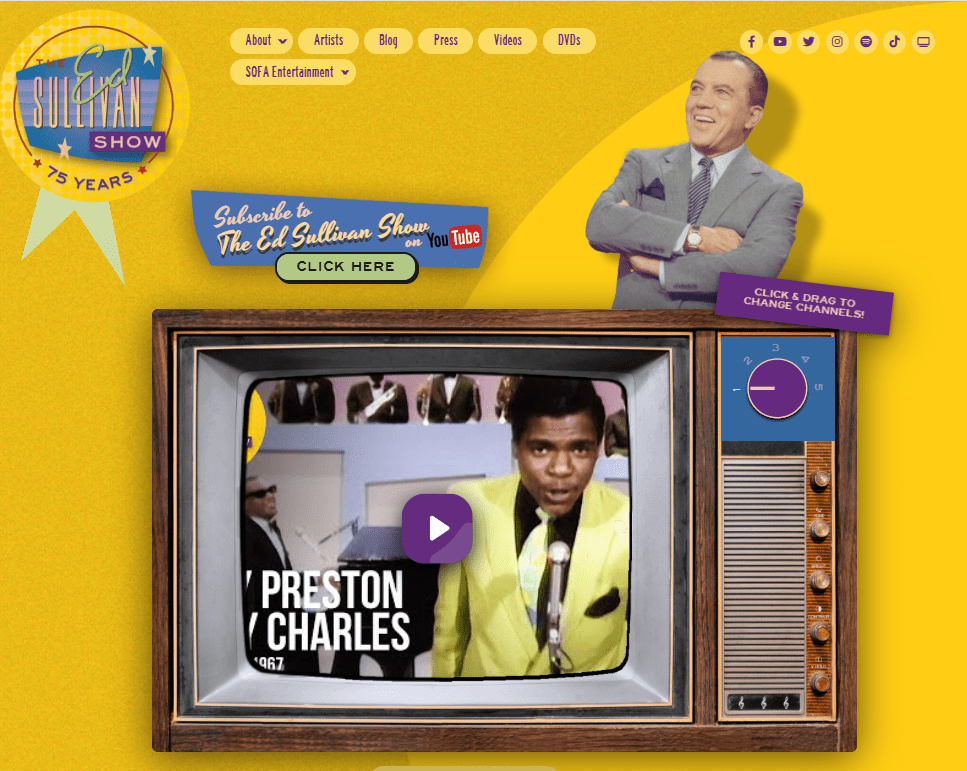
- The Ed Sullivan Show – YouTube Channel – Subscribe!
CFR: In Addition
Wow. Ok. Ed Sullivan is now my hear too!
Let me say it now: I was born 18 days after the Beatles first appeared on the Ed Sullivan Show.
I never knew this about Ed Sullivan so now I really appreciate him and his show.
During the 1960s my parents were activist. Totally anti-racist. So I bet if I talked with them today (they are in spirit so no communication) they would be impressed about Ed Sullivan. Or tell me yes, dear I knew that.
Now to add to this I will say: What the Ed Sullivan Show went through is why it is important to me today that we have PoC in all media. PoC actors, singers, dancers, all artists, have had to fight extra hard to get their art shown. Respect. Let’s keep it coming.
When I first read Cranky’s review Salt-n-Pepa’s song “What A Mighty Good Man” played in my head. So click on the link and enjoy.
I think Ed is worth it. I hope Salt-n-Pepa agree.
 Chick Flicking Reviews